Tomorrow's Angels

Originally conceived as veiled archetypes of the future, these faceless figures evolved into “Tomorrow's Angels” in Lossgott's later understanding — symbols of souls in formation. Through seated, standing, and reclining postures, each angel embodies a facet of spirit: waiting, listening, offering, or struggling. The series charts an arc from mystery to revelation, culminating in forms that hint at identity beyond the veil.

“I have not furnished the figures with any titles or explanations. … A work of art must be strong enough to speak its own dialogue and be understood.” Kurt Lossgott in conversation with Susan Smuts, Rosebank/Killarney Gazette, 31 May 1989

Tomorrow I (The Stranger)

Upright, passive witness in veiled quietude.

The Stranger, the first in the series, also known as Tomorrow I, stands straight, shoulders relaxed, draped in smooth folds of resin. No gesture distinguishes it; it simply holds space. This silent sentinel represents the soul encountering form — neither resisting nor commanding. Its anonymity and stillness emphasise presence as an act of being rather than doing, inviting viewers to contemplate their own thresholds between spirit and matter.

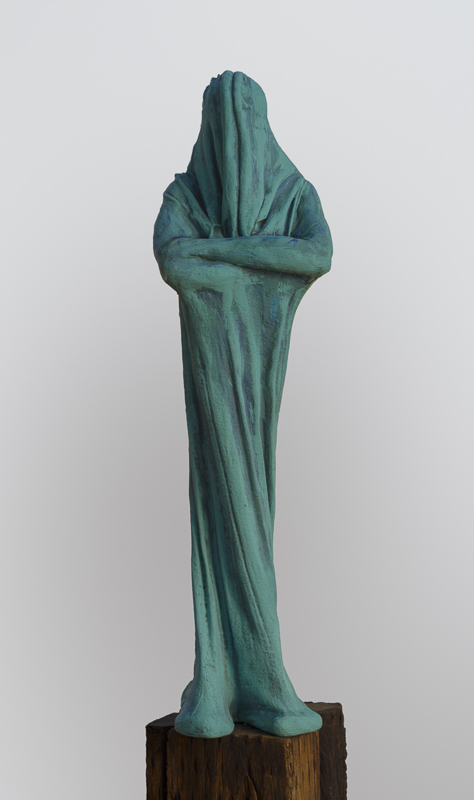
Tomorrow III (The Master)

Arms crossed, veiled authority and inner sovereignty.

A towering figure clothed in patinated amalgam bronze, The Master stands with arms folded. Its posture conveys calm authority and grounded stillness, evoking an archetype of inner sovereignty. Without facial features, the sculpture invites projection: teacher, ruler, guardian. Cast in the early 1990s, this figure became a key exemplar of Lossgott's veiled series about the redefinition of our future. It refers to the sublime of the unknown, which has the power to compel or destroy us.

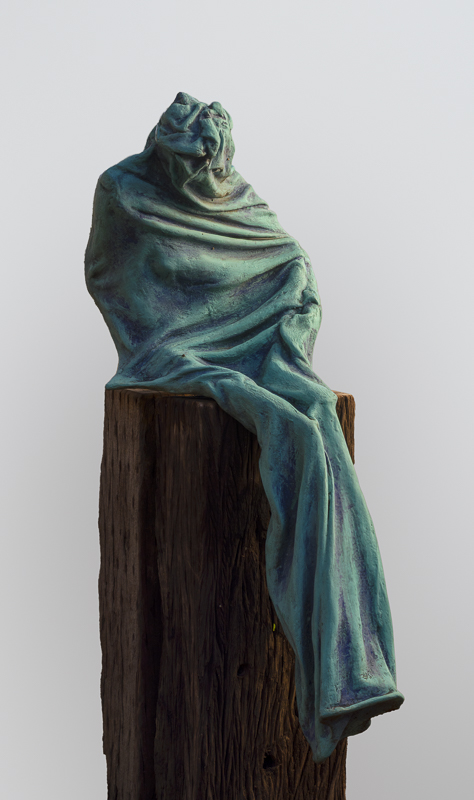
Tomorrow IV (The Elder)

Seated, meditative, cloaked in timeless patient presence.

Seated atop a wooden sleeper, The Elder is cloaked in heavy turquoise resin folds that resemble ancient robes. The bowed head and gathered form suggest introspection and patience. With no face to anchor identity, the reclining sculpture becomes a vessel of collective wisdom pausing — an angel who waits through epochs, embodying the power of silent endurance.

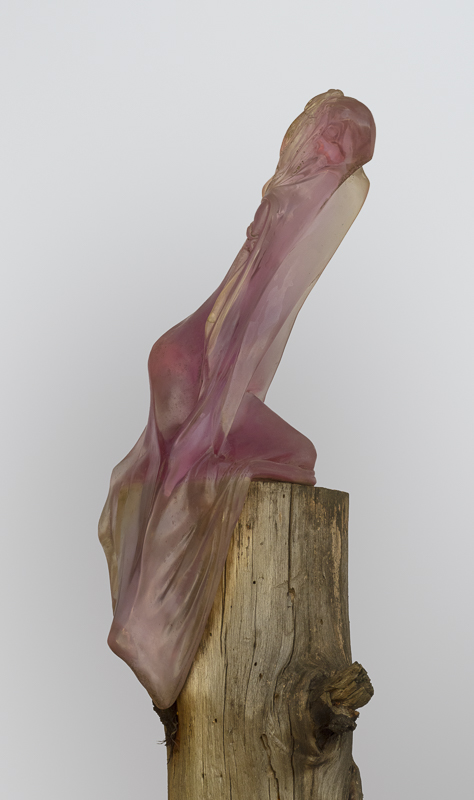
Tomorrow V (The Lover)

Transparent violet-pink resin figure leaning forward in receptive silence.

This transparent resin figure — tinted violet-pink — leans forward with knees bent and drapery flowing. Light passes through the sculpture, turning it into a beacon of connection. Its posture evokes intimacy and openness, suggesting a companion who listens without judgement. Its speculative title, The Lover, reflects the depth of emotional resonance found in stillness.

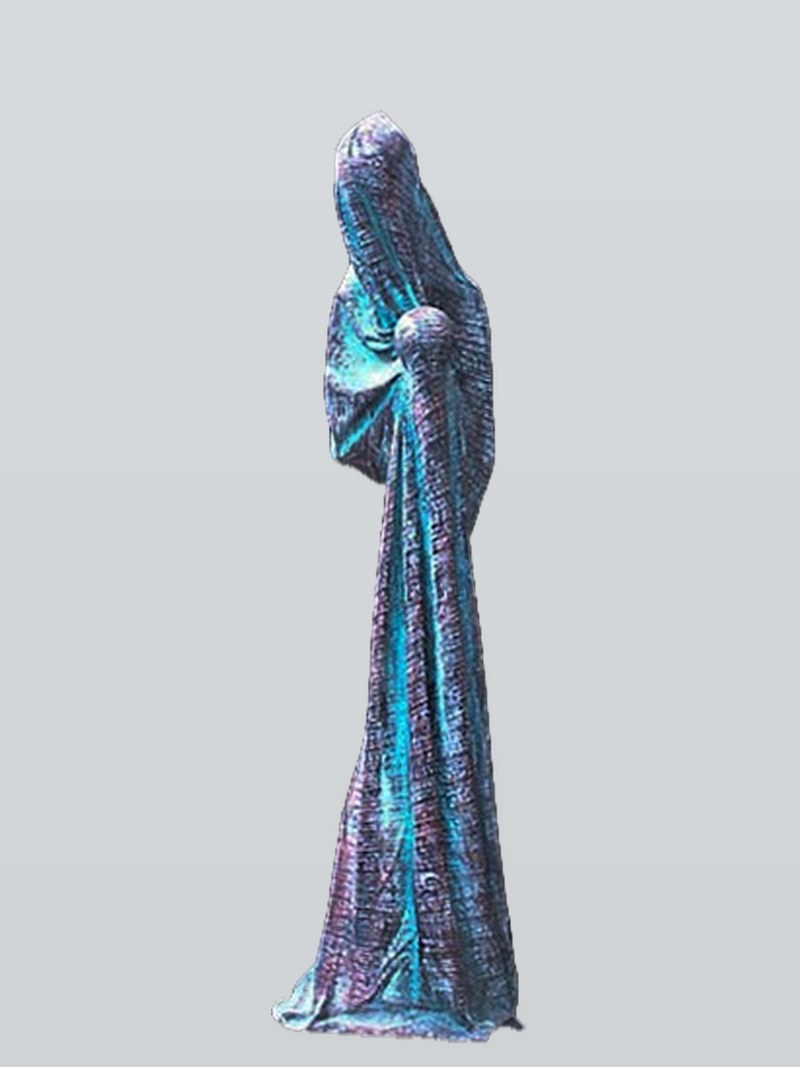
Tomorrow II (The Prisoner)

Standing angel clasping an unseen sphere — attachment as self-imposed captivity.

The Prisoner stands with arms curled inward around a hidden orb, head bowed toward its hands. The tight folds of resin suggest the weight of obsession — not imposed confinement, but attachment that binds the spirit. Lossgott's sculpture manifests the Buddhist insight that suffering arises from clinging; here, the bandaged drapery becomes both garment and prison. Unfinished touches on the orb leave its identity open: memory, desire, or fear.

Tomorrow VI (The Beggar)

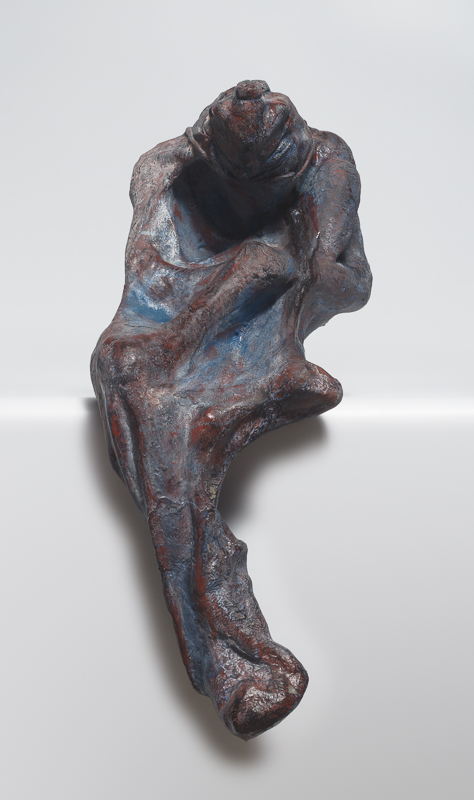
Crouched life-sized figure, body folded in vulnerability and plea.

Hunched low, knees drawn to the chest, and arms wrapped around the knees, The Beggar huddles into itself — veiled, downcast, and resolute in its vulnerability. Rust-tinted resin gives the surface an earthen quality. Unlike other angels who offer or guide, this figure asks to be seen. It embodies the soul's lowest ebb, reminding viewers that collapse is part of becoming and that even angels can hide in simple clothes.

Tomorrow VII (The Mother)

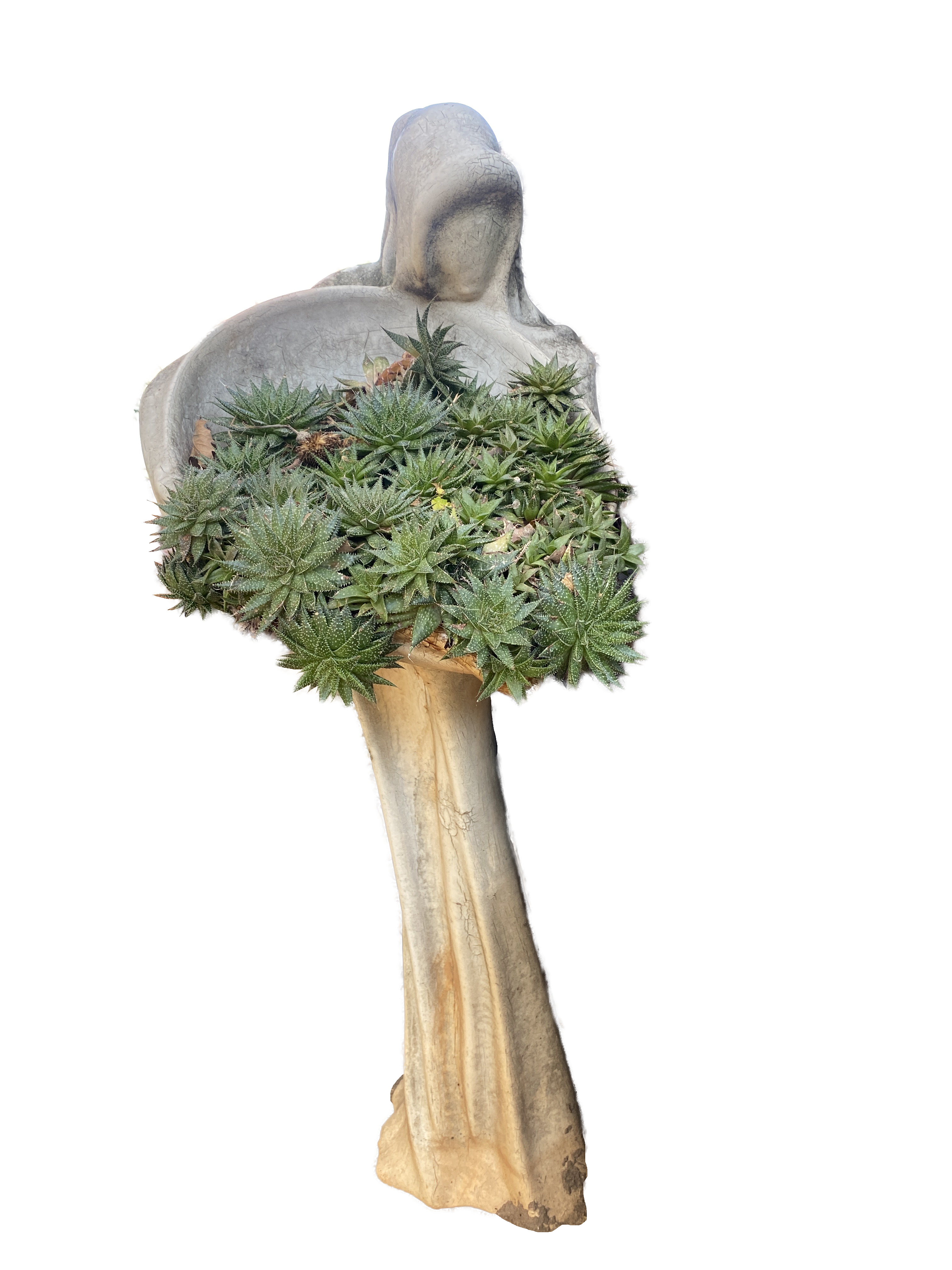
White resin fountain / planter, open bowl in arms offering nurture.

This angel's arms form a bowl — designed as a fountain or a planter — casting water or soil. Made of white stone-powder resin, The Mother radiates purity and giving. Its open gesture contrasts with the inward focus of other angels, embodying care and renewal. Installed in garden and public contexts, the piece merges ritual and practicality, inviting interaction with spirit.

Shortly before his death, Kurt had the realisation that the figures were angels. The archetypal titles were chosen by his son based on what Kurt used to say about each work, or on conversations he reported with members of the public about them.

Among the articles Kurt kept in his own portfolio, one was a 1980s gallery brochure for this series. The critic closed by quoting Joseph Beuys:

Kunst ist nicht, Kunst wird.” — Art doesn't exist, art becomes.

Beside it, in the same article, the line: “Surely art becomes itself through the communication which the viewer experiences with the work. This forces us to find it.”

Where to next

Twenty years later, the questions returned. Lucifer — a chrome-winged angel fallen from pride — hung unfinished above Kurt's hallway, still being reworked the year he died.

See the Spirit Series — the late metaphysical thread →